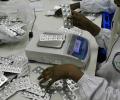
After reports of contamination in cough syrups sent from the country, India is considering a system to test them before exporting. It is learnt that the Central Drugs Standard Control Organisation (CDSCO) has sent a proposal to the Union health ministry on this. The idea is to test the medicines at government labs before exporting.
ITC was the biggest gainer in the Sensex pack, rising nearly 3 per cent, followed by Kotak Mahindra Bank, ICICI Bank, Maruti, Bharti Airtel, State Bank of India, Sun Pharmaceutical Industries, Axis Bank, Reliance Industries, Hindustan Unilever and JSW Steel. On the other hand, Infosys, UltraTech Cement, HCL Technologies, Bajaj Finserv, Larsen & Toubro, Titan, Tata Consultancy Services and Wipro were the laggards.
Many say trend could lead to concerns on manufacturing quality in Indian facilities.
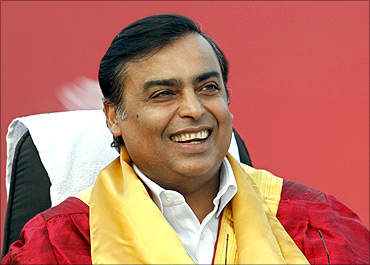
The global billionaires list witnessed as many as 94 new entrants from India, stated a report by Hurun India on Tuesday. Following a net addition of 84, the country's billionaire tally touched 271 with their combined wealth at $1 trillion, noted the report. Mukesh Ambani, chairman & managing director of Reliance Industries, is the only Indian to make it into the top 10 of the Hurun Global Rich List 2024, a ranking of billionaires in US dollar terms.
Rosier year-end seen for Indian pharma thanks to faster US approvals.
If the concerns over risking political capital are overcome, the long-term gains for the Indian economy will be immense, asserts A K Bhattacharya.
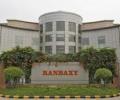
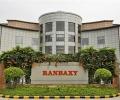
Bhai Mohan Singh, the grand old man of India's pharmaceutical industry and founder of Ranbaxy laboratories, passed away on Monday evening at the age of 89.
The domestic benchmark indices - the S&P BSE Sensex and the National Stock Exchange Nifty50 - had lost close to 1.5 per cent in three days recently before gaining slightly. Notwithstanding weakness and volatility, the Nifty50 has managed to hold on to the 18,000 mark, while the Sensex has managed to stay above the 61,000 level. The performance of the stocks that comprise these front-line indices remains polarised.
With regulatory uncertainties clouding the future of online pharmacies, deals in the space are showing signs of slowdown, as also fresh investment from private-equity (PE) firms and venture capitalists (VCs). The data from Venture Intelligence shows so far in 2023 (as of June 13) there has been one deal with PE-VC funding. In 2022 there were four, a sharp fall from the 12, totalling $1,520 million, the sector had attracted in 2021.
Corporate India is starting to step up its capital expenditure plans amid government incentives and signs of rising demand, company executives and analysts have indicated. This coincides with the Reserve Bank of India (RBI) recently citing a double-digit growth in private capital expenditure. Healthy balance sheets of banks and corporates, along with increasing capacity utilisation and improving business sentiment, are contributing to a favourable environment for sustained growth in private sector investments, the RBI said in its policy last week.
The smaller players in the business - combined under the Small Pharmaceutical Industries Confederation - have raised objections to the proposed Uniform Code of Pharmaceutical Marketing Practices.
The United States agreed with the nascent pharmaceutical industry in India that adequate protection of intellectual property rights would boost its ability to attract financing and safeguard new inventions, a senior State Department official said.
India's largest listed pharmaceutical (pharma) company - Sun Pharmaceutical Industries (Sun Pharma) - is expected to maintain its outperformance vis--vis the sector's, as its multiple bets on specialty products, improving product mix, recent acquisitions, and branded business are finding favour with brokerages. While it has gained 7 per cent over the past year, the Nifty Pharma Index is down 13.6 per cent. Its outperformance over two years has been fairly evident, with the market leader gaining 66 per cent to Nifty Pharma's minus 1.4 per cent.
While about 8,000 people are in the long list of invitees, the select list features just a few hundred people, including prominent politicians, leading industrialists, top film stars, sportspersons, bureaucrats and diplomats.
Of the Rs 1.97 trillion that the government intends to spend on all 14 production-linked incentive (PLI) schemes, around Rs 41,000 crore remains unutilised as of now, according to a senior government official. This means that 80 per cent of the total allocated amount, or Rs 1.56 trillion, will be used to pay incentives to companies eligible to claim benefits over the next few years. The unutilised amount/savings result from undersubscription, lukewarm responses in the case of schemes such as textile, as well as a reduction in the allocation of schemes.
Under terms of the agreed deal, Ranbaxy shareholders will get 0.8 of a Sun Pharmaceutical share for each Ranbaxy share they own.
"I took some time to explore the contours of this initiative. I don't use the term 'game-changer' too often but it's apt in this case. For me, what's much more important than the mechanics of the scheme is the dramatic shift it signals in the attitude towards industry," Mahindra said in a tweet.
Which entrepreneur would willingly part with her or his hard-earned money for grasping, self-serving politicians? asks Debashis Basu.
Sun Pharma open to large acquisitions post Ranbaxy.
Last year, Ranbaxy had to pay a fine of $500 million to the US authorities after it pleaded guilty to fraudulent activities and misrepresenting data to seek fast approvals.
The mutual fund (MF) industry had an action-packed 2023 as it tackled the scrapping of tax benefits for debt fund investors and surging flows into equity funds.
"The 2012 outlook for the Indian pharmaceutical industry is stable. The agency expects credit profiles to remain stable given that long-term earnings and profitability prospects remain intact with moderate capex," Fitch said in its report '2012 Outlook: Indian Pharmaceutical'.
Domestic customers will get access to high-quality Swiss products such as watches, chocolates, biscuits, and clocks at lower prices as India will phase out customs duties under its trade pact with the EFTA bloc on these goods over a period of time. India and the four-European nation bloc EFTA signed a trade and economic partnership agreement (TEPA) on Sunday to boost trade and investments between the two regions. The European Free Trade Association (EFTA) members are Iceland, Liechtenstein, Norway, and Switzerland.
Sun Pharmaceutical said Ranbaxy shareholders will get 0.8 Sun Pharma shares for each Ranbaxy share.
DUSA is a dermatology company focused on developing and marketing its Levulan photodynamic therapy platform.
Both Putin and Zelenskyy have invited the prime minister to visit Russia and Ukraine respectively after the Lok Sabha elections, sources said, adding they see Modi as a "peacemaker".
Facing a steep rise in raw material and interest costs, pharmaceutical companies have sought an increase in prices of regulated medicines, saying otherwise they may be forced to curtail production of certain medicines that have become unprofitable.
'Interim Budget has ignited the entrepreneurial spirit.'
India's clinical trials business is expected to reach $1 billion.
Shanghvi founded Sun Pharmaceuticals in 1983 with five psychiatry products and a marketing team of just two persons.
The Indian pharma industry is estimated to grow at 9-11 per cent in 2021-22 and in the next few quarters, it will be driven by domestic and emerging markets, according to ratings agency ICRA. In a sample of 21 Indian pharmaceutical companies, ICRA said revenue growth was moderate at 6.4 per cent in the second quarter of FY22, down from 16 per cent in the first quarter of 2021-22. The normalisation of the base and pricing pressures in the US market were the major reasons for slowing growth momentum in Q2 FY22, even as growth under domestic and emerging markets remained healthy, ICRA said in a statement.
The report of the January 25 meeting was placed before the high court last week.
Sun Pharmaceutical's acquisition of Ranbaxy has received final approvals.
Global capability centres (GCCs) are increasingly looking to tap into revenue opportunities from the Indian market, which is already a critical talent hub. While capturing the potential of the Indian market has been in the works over the past few years, it's only of late that companies are gaining momentum. India is home to more than 1,580 GCCs, with a total market size of $46 billion and growing at a compound annual growth rate (CAGR) of 11.4 per cent, according to a Nasscom-Zinnov report.